

Scholars Raising Awareness: Jessica Nora Lopez
Richmond Promise Scholars are de-stigmatizing Mental Health by creating conversations around mental well-being and self care on their college campuses.
 As Richmond Promise’s Scholar community reaches the end of their semesters, stress levels reach their peak with final exams. In recognition of Mental Health Awareness Month, Richmond Promise is highlighting a couple of RP Scholars who are using their academic pursuits to raise awareness about Mental Health and its impact on marginalized communities of color – particularly in the sphere of Public Health.
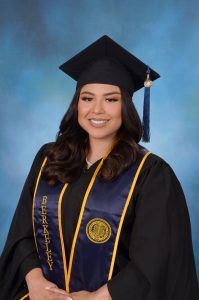
Jessica Nora Lopez is an RP Scholar who recently graduated from the University of California, Berkeley with a bachelor’s degree in Public Health.
Richmond Promise staff connected with Nora to ask her about her higher education journey, plans for post-grad, and her work in advocating for Mental Health awareness in relation to her interests in Public Health.
Q: Tell us more about who you are:
My name is Nora, and my pronouns are she/her. I attended high school in Richmond and recently graduated from the University of California, Berkeley with a degree in Public Health. I have lived in Richmond my entire life and continue to reside there as a commuter student. During my time at UC Berkeley, I was involved in several communities and organizations. One of the most transformative experiences was being a part of the Maternal, Child, and Adolescent Health (MCAH) LEAP Scholars program. Through my journey in the Leadership Education Advancement in Undergraduate Pathways (LEAP) program, I underwent a transformative experience that significantly enhanced my confidence in my research abilities, particularly in conducting qualitative research. The program served as a pivotal point in my life, providing not only valuable academic lessons but also a supportive community that became a second family. The exposure to community-based research within LEAP underscored the importance of understanding and addressing the unique needs of diverse populations. The mentors I gained through the program played a crucial role in shaping my approach to MCAH research, and being around peers with similar interests fueled my passion further. As I move forward in my MCAH career, I carry with me the lessons and skills cultivated within the LEAP program, appreciating the significance of community engagement and qualitative methodologies in making a meaningful impact. Additionally, I volunteered at Highland Hospital and conducted research as a student researcher at UCSF. These experiences, combined with the support and knowledge gained from the LEAP program, have deeply influenced my commitment to public health and my desire to contribute to the well-being of underserved communities.
Q: Congratulations on graduating and earning your degree in Public Health! What are your plans post-grad?
As a student assistant at the California Department of Public Health (CDPH) Childhood Lead Poisoning Prevention Branch in Richmond, California, I contribute to the care management branch, working directly with public health nurses and doctors. My responsibilities include data management, communication with healthcare providers and clinics, and educational outreach with families statewide. During my gap years, I intend to deepen my involvement in clinical research, as I believe it is crucial to engage in work that has a direct impact on public health. I am particularly interested in research that addresses health disparities and improves health outcomes for underserved populations. I plan to seek opportunities that allow me to further develop my research skills, particularly in community-based participatory research and qualitative methodologies. My goal is to use this experience to better understand the complexities of public health issues and to contribute to meaningful change. Ultimately, I hope to continue my education and pursue a career in public health and medicine that combines research, policy work, and clinical practice to advocate for equitable healthcare access and improve health outcomes for all communities.
Q: In 5-10 years from now, where do you see yourself in the trajectory of your career?
In 5-10 years, I envision myself as a dedicated physician and public health professional, having obtained my MPH in Maternal and Child Health (MCAH) and my MD. My goal is to practice in underserved communities similar to the one I grew up in, where I can merge the principles of public health and medicine to address health disparities. I hope to create holistic, community-driven healthcare solutions that not only treat illnesses but also promote overall well-being by addressing the social determinants of health. A significant part of my mission will be fighting for birth justice and ensuring that maternal mortality rates among birthing people of color are drastically reduced. I am committed to advocating for equitable healthcare practices, enhancing access to quality prenatal and postnatal care, and implementing culturally competent interventions that support the unique needs of these communities. My dream is to lead initiatives that improve maternal and child health outcomes, ensuring that every family has access to quality healthcare regardless of their socioeconomic status. By integrating my public health knowledge with clinical practice, I aim to implement effective, evidence-based strategies that foster healthier communities.
Q: Looking back to the time you spent at Cal as a first-generation Latina, what advice would you give to first-generation, Latinx students starting their first year at Cal ?
To my fellow first-generation Latinx students embarking on their journey at Cal, my advice is to embrace your identity and let it be your strength. Your unique perspective and experiences are invaluable assets that enrich the academic community. Don’t be afraid to seek out and build your support network—there are many resources, organizations, and people at Cal who are eager to support you. Get involved in communities and programs that resonate with your passions, as they will provide you with not only academic growth but also lifelong friendships and mentors. Remember, your journey may come with challenges, but each obstacle is an opportunity for growth and resilience. Stay true to your goals, believe in your potential, and know that you are paving the way for others who will follow in your footsteps. Your presence at Cal is powerful, and your success will inspire many more to dream big and achieve their aspirations.
Q: As a first-generation, Latina student, what were some challenges you faced navigating the higher education system and how did you overcome these challenges?
As a first-generation Latina student navigating the higher education system, I faced several challenges, including financial pressures, the need to balance work and academics, and the responsibility of being a commuter student. These challenges often created additional obstacles that I had to overcome to succeed academically. One major challenge was the financial burden of college tuition and expenses. As a first-generation student, I didn’t have the same financial support or resources as some of my peers. This meant I had to work extra hard to secure scholarships, grants, and financial aid to cover my tuition and living expenses. Additionally, I had to juggle working jobs while attending classes to support my family, which often left me with limited time and energy to focus on my studies. Another challenge was the lack of familiarity with the higher education system. As the first in my family to attend college, I didn’t have anyone to turn to for guidance or advice on navigating the academic landscape. This made it difficult to know which classes to take, how to access resources on campus, or how to plan for my future career. Despite these challenges, I was able to overcome them by seeking out support and resources on campus. Programs like the LEAP program at UC Berkeley provided me with financial support, professional guidance, and personal mentorship, which helped me stay on track academically. I also sought out additional academic support through programs like adjunct classes, which provided small-group collaboration and individualized office hours that were instrumental in my academic success. Overall, while navigating the higher education system as a first-generation Latina student presented its challenges, I am proud of how I persevered and overcame them. Graduating from an institution like UC Berkeley is not only a testament to my hard work and determination but also a source of pride for myself and my family. It demonstrates that with resilience and support, I can achieve my academic and professional goals despite the obstacles in my path.
Q: How proud are you to be graduating from an institution like UC Berkeley?
I am incredibly proud to be graduating from UC Berkeley, especially as a first-generation student. This degree is not just mine; it represents the hard work and sacrifices of my entire family. My mother, in particular, played a significant role in my journey. Her daily messages of “tu puedes” (you can do it) throughout my undergraduate years were a constant source of motivation and strength, especially during the toughest days. Knowing that my success would make her proud kept me going, and I would do it all over again if it meant bringing her joy. I also owe a debt of gratitude to my community and friends, whose support and encouragement have been invaluable. Their belief in me, even when I doubted myself, pushed me to strive for excellence. Graduating from UC Berkeley is not just a personal achievement; it is a testament to the collective effort of everyone who has supported me along the way. As I look forward to continuing my academic journey, I do so with a deep sense of pride in how far I have come. Being a first-generation student has its challenges, but it has also instilled in me a determination to succeed and a desire to make a difference in my community. I am excited for the opportunities that lie ahead and grateful for the foundation UC Berkeley School of Public Health has provided me to pursue my dreams.
Q: How did Richmond Promise make an impact on your higher education journey?
Richmond Promise has had a profound impact on my higher education journey, and I am incredibly grateful for the support and resources they provided. Throughout my undergraduate years, Richmond Promise’s advising hours were very helpful. Whenever I had questions about financial aid, needed to check in about my progress, or sought professional opportunities, their team was there to help. As a first-generation student, navigating the complexities of higher education can be daunting, but Richmond Promise made my journey much easier. Their welcoming and supportive environment always made me feel like I had a place to turn to for guidance and assistance. Whether it was help with scholarship applications, career advice, or simply a listening ear, Richmond Promise was there for me every step of the way. As I continue my academic journey, I know that I will continue to rely on Richmond Promise for support. The connections and resources they provide are invaluable, and I am confident that they will help me navigate the challenges that lie ahead. I am so grateful for Richmond Promise and the impact they have had on my life, and I look forward to continuing to work with them as I pursue my academic and professional goals.
Q: May is Mental Health Awareness Month, how do you see your career path in public health aligning with discussions and awareness for mental health?
As Mental Health Awareness Month approaches, I am reminded of the profound impact mental health discussions have on our communities and the crucial role public health plays in fostering mental well-being. In my career path in public health, I envision myself as a changemaker, advocating for mental health awareness and accessibility to care. Especially in communities such as the Latinx community, where mental health is not always openly discussed, bringing mental health awareness is crucial. By addressing cultural taboos and barriers to care, we can empower individuals to prioritize their mental well-being and seek the support they need. In my career in public health, I am committed to advocating for mental health in underserved communities, ensuring that everyone has access to culturally sensitive and inclusive mental health services. Together, we can break the silence surrounding mental health and build a healthier, more resilient future for all. Mental health discussions are essential because they break down stigma, promote understanding, and encourage individuals to seek help. By openly addressing mental health, we can create supportive environments that foster resilience and healing. Public health interventions can play an important role in this by promoting mental health education, early intervention programs, and access to mental health services.
Photo Courtesy of Jessica Nora Lopez
Author’s Note: For more student-centered Mental Health resources and hotlines, check out the RP May Scholar Newsletter.