

Mentor Spotlight: Megan and Marissa
Through the Richmond Promise Mentor Program, RP Scholars have the opportunity to pair with a professional who can share knowledge, skills, best practices and perspectives that help to foster both personal and professional growth.
Prior to the 2023-24 school year, University of San Diego senior Megan Sanchez knew graduate school would be part of her future plans. So, she joined the Mentor Program with the hopes of gaining a bit of guidance as she went through the application process.
Eventually, she got paired with Marissa Chávez, Senior Manager of Content at the California College Guidance Initiative, and the two got to work on grad school applications. In March, Megan got the notification that she’d been accepted into the San Diego State Ed.S. in School Psychology program.
Richmond Promise staff caught up with both Megan and Marissa to ask a few questions about their experience in the Mentor Program.
Megan Sanchez
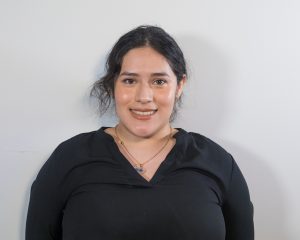 Q: What inspired you to apply to be part of the RP Mentor program? What were you hoping to get from it when you applied?
A: Going into the program, I knew I wanted to apply for graduate school and that I would need help applying for it. I was hoping to receive guidance from a mentor who had gone through the same process but that also represented parts of my identity so I could feel a sense of commonality.
Q: What stood out about Marissa as a mentor when you got to know each other a bit?
A: Marissa’s personality stood out to me. In our first meeting I asked them what it was like to be a mentor because I am a current mentor in a different program and I asked them for advice. They told me to be myself and that I’m a human being first. One thing that surprised me was that they watched a show called The Challenge which I haven’t found anyone else besides me and my friend who watch it. What I will always remember is the advice they gave me. One particular piece of advice was gray areas. We have gray areas in our life and we can’t always look at a solution to a problem as black and white.
Q: You’ve been accepted to join the Psychology Master’s program at SDSU. What has Marissa helped with as you’ve gone through the application process?
A: Marissa’s assistance in the application process is like sailing a ship: they help you chart the course from preparing the course of applications to maneuvering the interview, all while navigating my unpredictable sea of emotions while we wait for a response. They have been my cheerleader, my go-to resource, and my constant reminder that it’s possible, boosting my confidence along the way.
Q: We hear from our Mentees that just having someone to listen and provide advice can be such a huge resource for RP Scholars. What are a few of the ways in which Marissa has supported you since you’ve been paired together?
A: Marissa has listened to me when I have told them personal details about my life and history. They displayed no judgment even when I was scared to tell them such things because I worried they would look at me differently but once I told them I realized I should have known they would never be someone like that. I felt like I could trust Marissa and I felt like they were a huge part in the reason why I succeeded in my last year of my BA because our weekly meetings really kept me on track. I felt bad at first because I felt like I was taking up too much of their time by supporting me through essay writing but they reminded me of the value they saw in me and they gave me feelings of gratitude to have such support from a mentor. Marissa taught me so much wisdom especially pertaining to my identities and I’m forever grateful to have been able to receive her insights. One of our most recent conversations was around the topic of reputation in grad school and what the transition looks like from undergrad to graduate school. I’m so very lucky to already know what to expect and have tokens of answers in my notes on what I can look back on from my time with Marissa and have their wisdom before going into this next chapter in my life.
Q: Has your mentor experience helped direct you at all in terms of what you think you might like to do after you graduate?
A: Definitely. I am going into graduate school and I’m already thinking of what potential jobs I could have during grad school but I realistically don’t want to take on more than I can handle so I’m also considering waiting to get a job until I’ve settled into my first semester in grad school.
Q: What would you say is the most challenging part of college for you these days? And, are there ways that your mentor has helped you get through it?
A: I would say the most challenging part is loneliness. Luckily I was able to meet with my mentor once a week and I felt like someone was constantly consistently checking in on me and my goals. My mentor was a huge part of my social life. I felt like I had a friend and a guide wrapped into one. I would also say it’s hard to get accurate advice from online resources of what the actual college experience is like for someone similar to myself but having someone who I can connect with because of the certain identities they carry was very meaningful.
Marissa Chávez
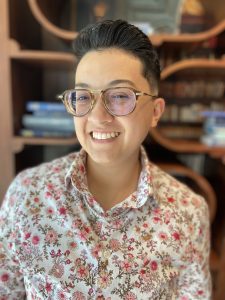 Q: In your initial application to become a RP Mentor, you referenced not having support in navigating your own higher education experience. As you’ve filled that mentorship role for Richmond Promise, how have you tried (in a broad sense) to provide that support for Megan?
A: As a mentor and a trained helping professional, I am student-centric in my approach. I make sure to let Megan lead the meetings and set the agenda. While I support her I’m also challenging her. This looks like being an active listener, asking probing questions, and encouraging her to go above and beyond. I hold Megan accountable for the timelines and goals she sets for herself. I make sure I share my knowledge of higher education, admissions, support programs, financial aid, and career readiness. Most of all I do my best to be present and open. I share my personal experiences in higher education and being a first-generation student and professional.
Q: We know Megan from her time as a member of the RP Student Advisory Board. As you’ve gotten to know Megan, what has stood out about her as a student?
A: Megan is fearless and determined. From our first meeting, it was clear they had a goal and were ready to work very hard to get where they wanted.
Q: How did you and Megan work together to help her apply to the Psychology Master’s program at SDSU?
A: Megan and I met weekly to prepare for her graduate school application. I gave her homework like researching graduate programs, researching professors, coming up with a research question for her studies, and learning about the admission requirements. Once she selected her programs, we made sure she met the admission requirements. The personal statement essays were the most time-consuming. We would edit them and discuss strategies to answer the questions in full and within the word limit. Once she was invited to the group interview, I worked with Megan on her interview skills. I held mock interviews with her and coached her. I gave her examples of possible group work that may come up in her interview. Graduate program interviews typically will assign you to a group and have you work through a prompt. So I wanted Megan to be prepared for anything they might have her do. I also encouraged Megan to meet with her school’s writing center and career center to get additional help.
Q: How did it feel for you as a mentor to learn that she was accepted into the program?
A: When I first met with Megan I asked her what her goal was for our mentor relationship. She wanted to apply and get accepted into a graduate program. So I gave her an action plan to make it happen. It was a lot of hard work and she got it done. It felt validating to hear Megan got accepted. I know she worked very hard to make this a reality. I was very happy for her and her family. As a first-generation student, I understand the impact this accomplishment has on her and her family. I’m proud of Megan and I hope she is proud of herself.
Q: We’ve asked Megan what in particular she gains from having a dedicated mentor, but I’m curious to know what you gain from the experience as well?
A: Being a mentor allows me to continue to share my expertise with others in the hopes that they will have a smoother experience while pursuing higher education and a career. It’s a privilege to contribute to other’s growth and development and hopefully make a positive impact in their life. The mentor relationship is reciprocal. Working with Megan has given me new perspectives and allowed me to refine my coaching process.
We, collectively as a Richmond community, gain so much by supporting our students in their educational and career journeys.
Q: Finally, you have lots of experience in the area of higher education/college success. Is there one piece of advice would you give Richmond Promise Scholars as they navigate their own college experience?
A: “Closed mouths don’t get fed.”
It’s important to speak up and advocate for yourself to get what you need. Remaining silent or passive won’t lead to assistance or opportunities. Asking for help, an extension on an assignment, financial support, or clarification on a topic might seem embarrassing, intimidating, or pointless. Don’t let those doubts stop you from advocating for yourself. You might receive a “no” in response to your request, and that’s ok. But, most people want to help others. You might have to ask the same question to multiple people. For example, if a professor isn’t giving you an extension although you have a valid reason, you might need to request help from the department chair or dean of students. It’s worth taking the chance and asking for what you need. You’d be surprised how much you can get by simply asking for it. Being vulnerable about your situation and needs can go a long way. People are more willing to help you if they know some context to your situation. It’s best to be explicit about what you need rather than waiting for things to happen. So, will you advocate for yourself?
To join the 2024-25 Mentor Program as either a Mentor or a Mentee, visit our Mentor page.